
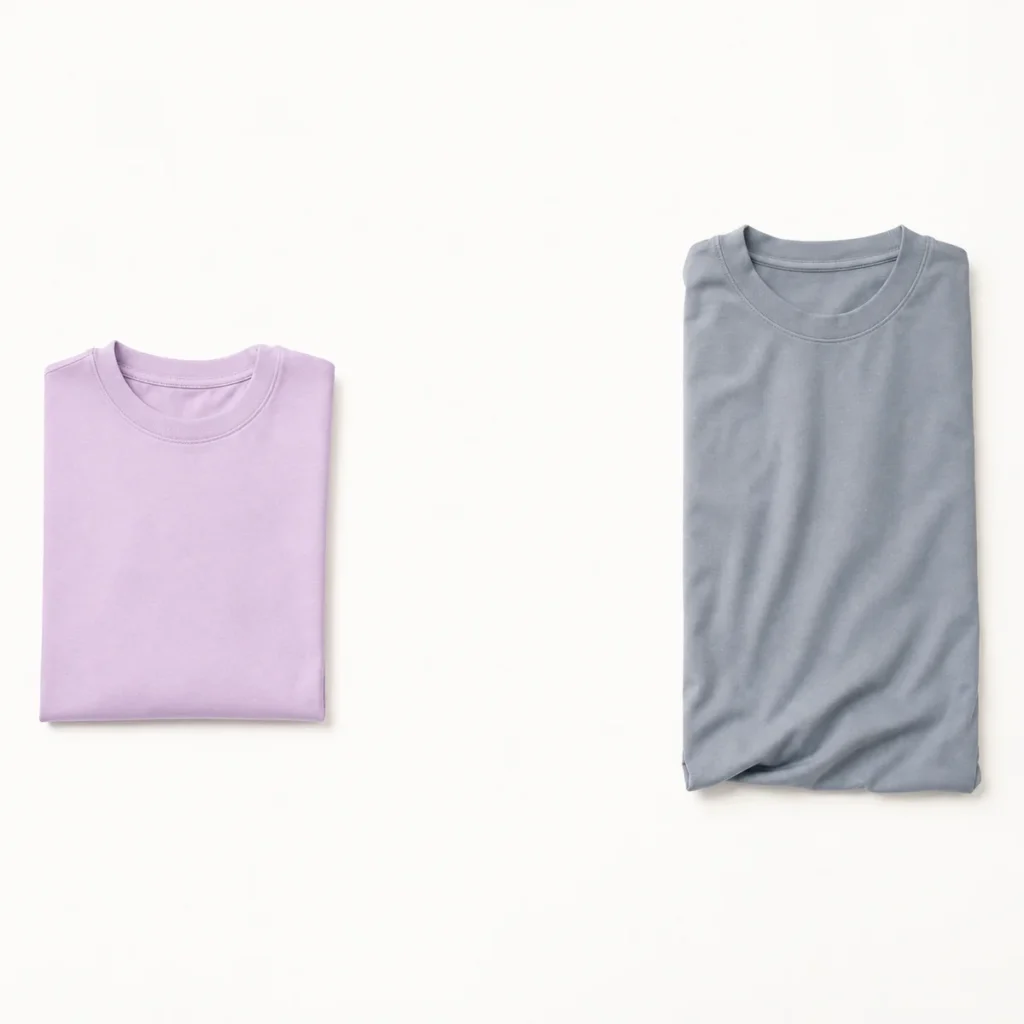
If you've stood in a clothing aisle with your 11-year-old and watched her reject the kids' section as "babyish" and the teen section make you visibly wince, you're not imagining a gap. It's real, and it's been under-addressed for longer than it should've been.
Two crowded extremes, one empty middle
Walk into almost any clothing retailer and the girls' section splits cleanly into two zones. One is designed for younger children — bright colors, cartoon-adjacent graphics, cuts built for smaller, rounder proportions. The other is designed for older teens — cropped silhouettes, styling borrowed from adult fashion, graphics and phrases pulled from trends that skew considerably older than 11.
A girl who's 9 to 14 doesn't fit cleanly into either. She's not a little kid anymore, and treating her like one shows up immediately in what she'll actually agree to wear. She's also not a teenager, and clothes styled for that age group often read as mature well past what's appropriate — or what a parent is comfortable buying.
The result is a lot of families buying around the gap: sizing down into kids' cuts that fit the body but read as childish, or sizing up into teen styling that fits the body but reads as too old. Neither is actually solving the problem. Both are compromises.
Why this age range specifically
The years between roughly 9 and 14 are when a girl's personal taste is genuinely forming — not imitating what a younger sibling likes, not yet fully absorbed into whatever a specific teen trend cycle is doing, but her own. That makes clothing choices at this age carry more weight than they might for a younger child: what she picks starts to say something about who she's becoming, not just what happens to fit her that season.
It also means the stakes of getting it wrong are higher than "it doesn't fit." A tee that reads as too childish gets refused outright. A tee that reads as trying too hard to look older gets refused just as fast, for the opposite reason. Both are common enough that most families in this age range have a story about a return, or a shirt that never got worn, or a shopping trip that ended in an argument neither side really wanted to have.
What we think the actual answer looks like
Not louder. Not more grown-up. Something that's current enough that she'll actually choose it, and considered enough — in fit, in fabric, in what it says — that you're comfortable being the one who buys it.
That's the whole premise behind why we started making tees specifically for this range instead of stretching a kids' line older or a teen line younger. Read our full approach for the specifics — how we choose fabric and fit, what we test before anything goes up for sale, and what we've deliberately ruled out along the way.
If you're in the middle of this gap right now
You're not wrong that it's hard to shop for. It's a real, documented gap in the market, not just a parenting frustration — and it's worth holding out for something actually built for the age range instead of settling for whichever compromise feels slightly less wrong this week.