
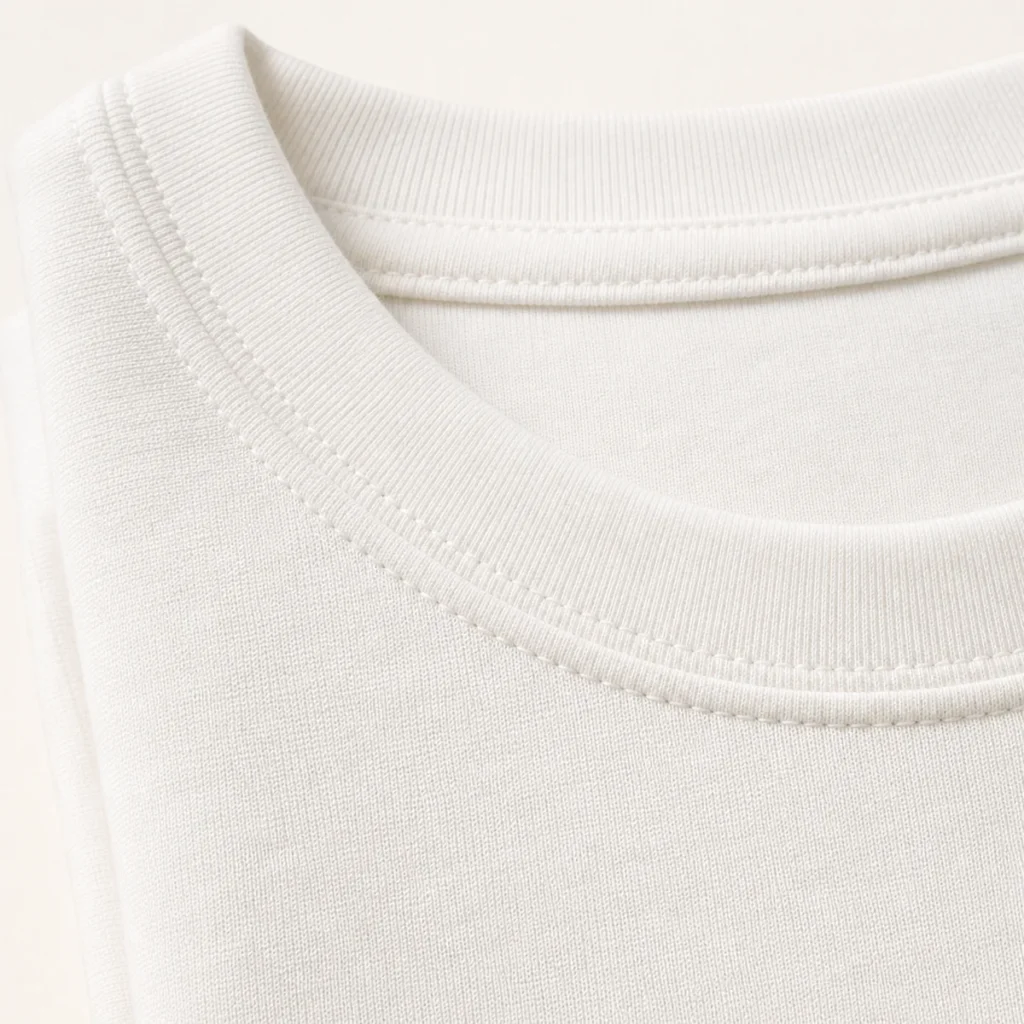
A t-shirt looks like the simplest thing you can buy — until you’ve bought three that shrank, pilled, or lost their shape after a handful of washes. At the 9-14 age range especially, a tee gets worn hard: gym class, sleepovers, the same three “favorites” on repeat for a full school year. Here’s what’s actually worth checking before you buy one, whether it’s from us or anywhere else.
1. Fit — against a real tee, not a size chart
Age-based sizing is a rough guess at best; two girls the same age routinely wear two different sizes. The more reliable method is measuring a tee she already owns and likes the fit of — chest and length, at minimum — and comparing those numbers directly to whatever you’re about to buy. If a size chart only lists “age 9-10” with no actual measurements in inches or centimeters, that’s a sign to look elsewhere or ask the seller for real numbers before you order.
2. Fabric — cotton-rich, and what that actually means
“Cotton-rich” isn’t just a label — it affects how a shirt feels against skin, how it breathes through a full school day, and how it holds up wash after wash. Cheaper poly-blends can feel fine on the first wear and then pill, cling, or lose shape fast. Worth asking (or checking the product page for): what the fabric is actually made of, not just “soft” or “premium” as unsupported adjectives.
3. Collar and neckline construction
This is usually where a cheap tee fails first — the ribbing loosens, the seam puckers, or the neckline stretches out of shape well before the rest of the shirt shows wear. It’s a small detail that’s easy to check in person and easy to miss in a product photo. If you’re buying online, look for close-up photos of the collar specifically, not just the front graphic.
4. Print opacity and how it’s applied
If the tee has a graphic, ask (or look for) how it’s printed. Prints applied too thin show fabric texture through the design and fade fast; prints applied too thick crack and peel after repeated washing and drying. Neither is obvious from a product photo taken once, fresh out of the package — it’s worth checking a brand’s actual print process rather than assuming “graphic tee” means the print will hold up.
5. Wash performance, not just first-wear feel
A shirt that looks great in the store or on a screen can still shrink a full size or bleed color after the first real wash. Shrinkage and colorfastness are things a brand can actually test before anything goes up for sale — worth asking whether they have, rather than finding out after you’ve already committed a wash cycle to it.
6. Real availability, not a size chart with gaps
A tee that only comes in even-numbered youth sizes, or skips the sizes that actually fit the 9-14 range well, isn’t solving the problem it’s supposed to solve. Check that the full range you need is actually in stock, not just listed.
Why we built our own process around this list
This list isn’t hypothetical — it’s close to the actual checklist we use when deciding what goes into our own collection: cotton-rich fabric chosen for hand feel and breathability, shrinkage and color stability tested before anything sells, and real garment measurements in inches and centimeters instead of age-based guessing. Read our full approach for the specifics, or use the Size & Fit Guide before your next order — with us or anyone else.