
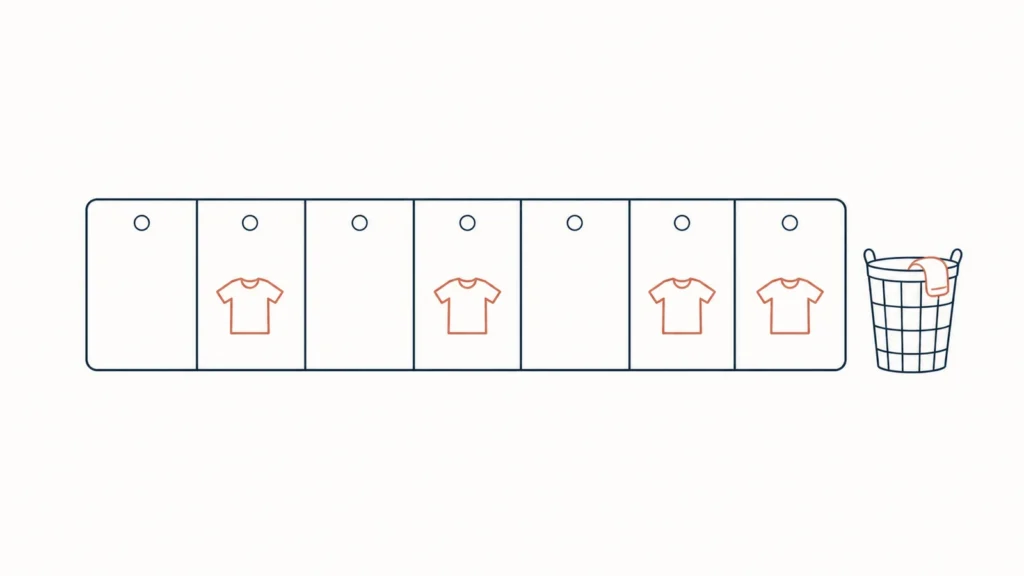
There’s no single universal rule for how often a t-shirt needs washing — it depends on activity level and how long it’s actually been worn — but a few practical guidelines make the daily hamper decision easier than deciding from scratch each time.
The general guideline for t-shirts
A t-shirt worn for a full, active school day — gym class, recess, a normal amount of movement — generally needs washing after each wear. A shirt worn for a shorter, lower-activity stretch (a couple of hours running errands, for instance) can sometimes go a second wear if it wasn’t heavily active, though that’s more of a judgment call than a hard rule.
What actually determines the answer
Why over-washing matters too
Washing more than necessary isn’t just wasted effort — every wash cycle is also a cycle of fabric-on-fabric friction, which is one of the main causes of pilling and general wear over time. A reasonable, activity-based wash routine protects the clothes as much as it protects hygiene.
A simple habit that helps
A dedicated hamper (rather than a floor pile) and a quick end-of-day check — worn hard, worn a little, or barely worn — turns this into a fast daily habit instead of a recurring debate.
Common questions
For a full, active school day, generally yes. For a shorter, lower-activity stretch of wear, it’s more of a judgment call based on visible dirt, odor, and how much movement happened while wearing it.
Washing more than necessary adds unnecessary fabric-on-fabric friction, which is one of the main contributors to pilling and general wear over time. An activity-based routine protects the clothes better than a blanket “wash everything daily” habit.
Check for visible dirt, stains, or odor first — those are always a yes. Beyond that, activity level during wear is the most useful signal: high-movement, sweaty wear generally means it’s time for a wash.
Read more about our wash-care approach in Stop the Peel, or check the FAQ for care details specific to our tees.