
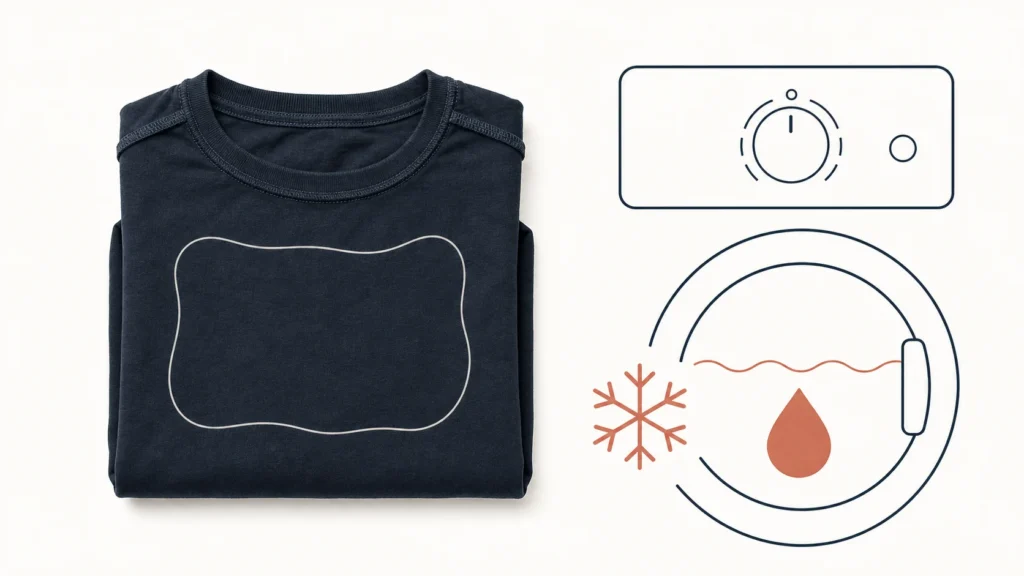
A cracked or peeling graphic print is one of the most common tee complaints there is, and it usually gets blamed on the shirt — when the actual cause is more often the washer and dryer than the print itself. The ink layer on a graphic tee behaves differently than the fabric underneath it, and how you wash it either protects that difference or wears it down fast.
Why prints crack in the first place
A printed graphic sits on top of the fabric as a distinct layer — more rigid than the cotton it’s printed on. Every time the shirt flexes, twists, or gets pulled through a wash cycle, that layer and the fabric underneath move at slightly different rates. Heat makes it worse: hot water and high dryer heat soften and stress the ink layer, and repeated cycles of that stress are what eventually show up as cracking, peeling, or fading — usually starting at the edges of the design first.
The wash routine that protects a print
The dryer is usually the real culprit
If a print is going to fail, high dryer heat is often more responsible than the washing machine. Tumble drying on high heat repeatedly softens and stresses the ink layer in a way a cold wash alone doesn’t. Air drying is the safest option; if a dryer is the only option, a low-heat or “delicate” setting, still inside out, is a reasonable middle ground.
One habit that matters most
If there’s only one thing to change: wash cold, inside out. It’s the single habit that does the most to protect a printed shirt, and it doesn’t cost any extra time over a normal laundry routine.
What this means for the tees we make
We print using direct-to-garment (DTG) on a cotton-rich blank, which is a different process than traditional screen printing — worth understanding on its own, covered in DTG vs Screen Printing: What Actually Lasts. The one care habit that gives any DTG print its best shot is the same one above: wash cold, inside out.
Common questions
Most often it’s heat and friction, not a defective print. The ink layer sits on top of the fabric and is more rigid than the cotton underneath it — hot water, high dryer heat, and repeated rubbing against other garments in the wash all stress that layer until it cracks or peels, usually starting at the edges of the design.
You can, but high heat is the single biggest risk to a printed shirt. If a dryer is the only option, use a low-heat or delicate setting with the shirt inside out. Air drying is the safer default whenever it’s practical.
Some care guides note that fabric softener can interfere with how well ink adheres to fabric over repeated washes. It’s not a dramatic effect from any single wash, but it’s an easy habit to skip on anything with a print you want to keep looking good.
Read more about how we’re deciding what goes into the collection in Our Approach, or check the FAQ for care details specific to our tees.