
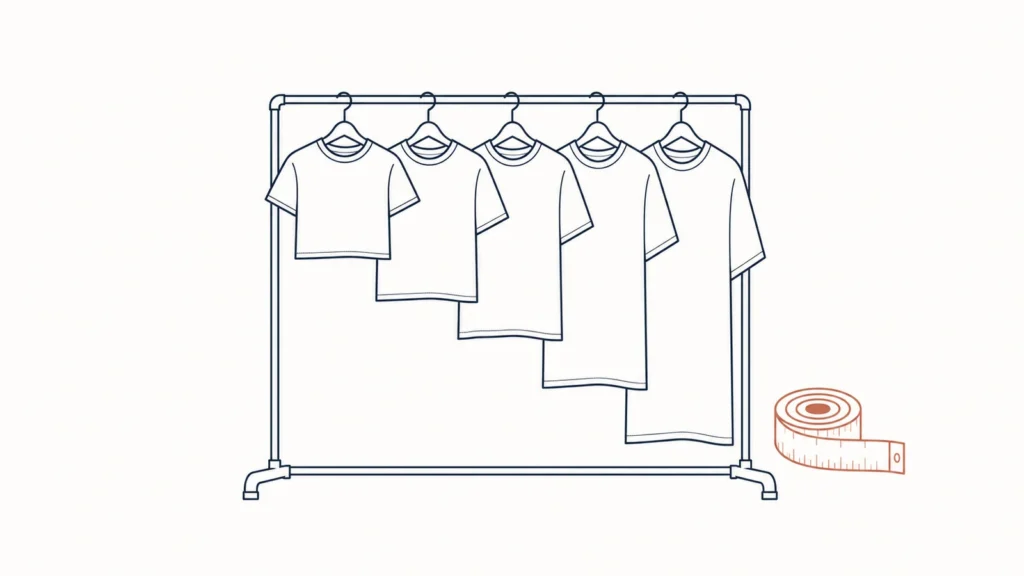
Secondhand and thrift shopping is a genuinely reasonable way to build out a tween wardrobe — different brands, different eras of clothing, and prices that make experimentation lower-stakes. The one real challenge is sizing, which varies more in secondhand racks than it does at retail, since you’re working across dozens of brands and manufacturing years at once.
Why thrift sizing is less consistent than retail
A single size label — say, a girls’ Large — can mean noticeably different actual measurements depending on the brand, the decade it was made, and whether it’s shrunk from wash and wear over its previous life. Retail sizing already varies brand to brand; secondhand sizing adds wear-related shrinkage and older cuts into that same inconsistency.
Bring a real measurement with you
The single most useful thrifting habit: bring the actual measurements of a shirt that already fits well — chest width and body length, measured the same way you’d measure any tee — rather than relying on the size tag on the rack. A tape measure (or even a piece of string marked to length) in a thrift bag turns size-tag guessing into an actual comparison.
What to check beyond size
Where thrifting fits into a wardrobe
Thrift finds work especially well for the lower-stakes, high-turnover parts of a tween’s wardrobe — everyday basics, layering pieces, things she’s likely to outgrow before wearing out — while newer pieces make more sense for anything meant to hold up over a longer stretch. See Building a Capsule Wardrobe for Your Tween for how to think about which pieces need to last vs. which don’t.
Common questions
Secondhand racks span multiple brands, manufacturing eras, and individual wear/shrinkage histories, all under one size label. Retail sizing already varies by brand; secondhand adds wash-related shrinkage and older cuts into the mix.
The actual measurements (chest width and body length) of a shirt that already fits well, ideally with a tape measure or a marked piece of string. Comparing real numbers against a hung garment is far more reliable than trusting the size tag.
Fabric condition (pilling, thinning at the elbows or collar), any stains or damage near seams, and whether the collar and cuffs still have stretch and recovery — all signs of how much wear life realistically remains.
Use the Size & Fit Guide calculator to get real measurements to compare against, or read How to Measure a Tee She Already Owns for the full method.